
Cold-weather camping requires careful preparation to maintain body heat and stay comfortable throughout the night. Staying warm is crucial for safety and enjoyment, especially in winter camping conditions where temperatures can drop significantly.
The best way to stay warm during cold-weather camping is to layer clothing effectively, use insulated sleeping gear, and choose a suitable shelter that blocks wind and retains heat. Proper equipment and technique prevent heat loss and help campers manage moisture and cold air.
Understanding how to combine materials, shelter design, and heat retention methods can make the difference between a challenging night and a successful adventure. This article explores practical tips to help anyone stay warm and safe in cold outdoor environments.
Fundamentals of Staying Warm While Camping in Cold Weather
Effective warmth management during cold-weather camping relies on understanding how the body loses heat, recognising the temperature ranges critical for safety, and preparing via proper weather assessment beforehand. These elements form the basis of a safe and comfortable winter camping experience.
Understanding Body Heat Loss
The body loses heat through conduction, convection, radiation, and evaporation. Conduction occurs when the body touches cold surfaces like snow or ice. Convection happens as cold air passes over the skin, removing heat rapidly. Radiation is the heat lost to the surrounding environment, especially from exposed skin.
Evaporation involves moisture from sweat or damp clothing, which can drastically increase heat loss. To minimise loss, campers should wear insulating layers and use dry, windproof outerwear. Maintaining a dry base layer is crucial, as moisture directly affects heat retention.
Critical Temperature Ranges for Winter Camping
Different temperature thresholds require distinct precautions. From 0°C to -10°C, layered clothing and insulated sleeping gear are necessary to maintain warmth. Between -10°C and -20°C, additional measures like windproof tents, heated sleeping pads, and thicker insulation are vital. Below -20°C, specialised equipment such as four-season tents, sub-zero rated sleeping bags, and heat-retaining accessories like balaclavas becomes essential.
Recognising these ranges helps campers avoid hypothermia and frostbite. Planning gear for expected temperatures improves safety and comfort, preventing exposure-related risks.
Pre-Trip Weather Assessment and Planning
Before departure, checking detailed weather forecasts for temperature, wind chill, and precipitation is critical. Wind chill is particularly important because it increases heat loss significantly. Using reliable sources like local meteorological agencies or specialised mountain weather sites ensures accuracy.
Packing must align with forecast conditions; cold-weather camping tips include bringing extra layers, backup heating sources, and sufficient food for energy. Planning an emergency shelter or evacuation route based on weather unpredictability is also advisable.
Campsite Selection and Effective Tent Setup
Selecting the right spot and setting up the tent properly are essential for staying warm when camping in cold weather. Key factors include shelter from wind, firm ground for anchoring, and effective insulation strategies.
Choosing the Ideal Campsite
A sheltered location is critical to reduce wind chill. Camp close to natural windbreaks, such as dense trees or rock formations, which block cold gusts without risking falling branches.
Avoid low-lying areas where cold air settles overnight. Instead, choose elevated or gently sloping ground for drainage and to minimise frost accumulation.
Check for firm soil or compact snow to securely use deadman anchors for guy lines. Soft or loose ground reduces tent stability in winter winds.
Selecting the Right Tent Type
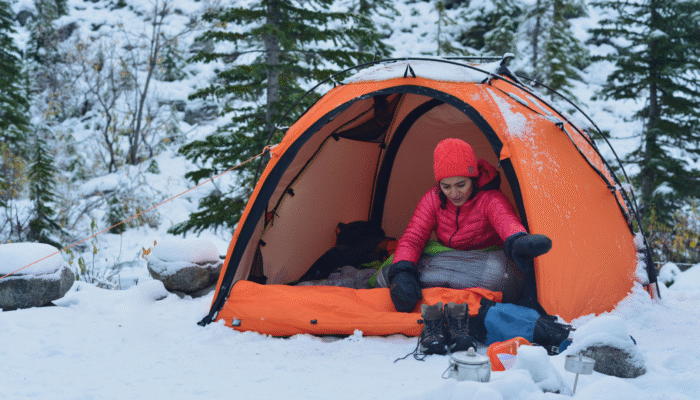
A 4-season tent is designed for cold conditions with stronger poles, robust fabric, and full coverage to prevent snow accumulation and heat loss.
Choose tents with minimal mesh and full-coverage doors to limit cold air entry. Double-wall designs offer an important thermal barrier to reduce condensation inside.
Ensure the tent design allows for ventilation adjustments. This manages moisture buildup without sacrificing warmth, preventing dampness that can make the cold worse.
Insulating and Positioning Your Tent
Lay a thick ground insulation layer, such as foam pads or reflective mats, beneath the tent floor. This cuts conductive heat loss to snow or frozen earth.
Position the tent with its narrowest profile facing prevailing winds to reduce heat loss through fabric movement.
If using a tent heater, follow safety protocols to avoid carbon monoxide risks. Heaters should be designed for tent use, with proper ventilation.
Tightly secure guy lines with deadman anchors to prevent the tent from collapsing in strong winds, maintaining the tent’s shape and warmth retention.
Essential Winter Camping Gear for Maximum Warmth
Staying warm during winter camping requires selecting specific gear designed to retain heat and insulate from cold surfaces. Proper insulation from the ground, effective sleeping bags, and useful accessories all contribute to maintaining body heat throughout the night.
Choosing a Winter Sleeping Bag
A winter sleeping bag should have a rating suitable for the expected temperature, typically between -5°C to -20°C, depending on the location. Down insulation offers an excellent warmth-to-weight ratio but loses effectiveness when wet, while synthetic fills retain warmth even if damp.
Look for bags with a snug hood and draft collars to prevent heat loss around the head and neck. A mummy-shaped bag is best as it reduces air space and preserves heat. Zips with draft tubes prevent cold air from entering. These features make a big difference in cold environments.
The Importance of Sleeping Pads and Ground Insulation
Sleeping pads provide essential insulation from cold ground, which can cause significant heat loss. Closed-cell foam pads are durable, lightweight, and maintain their insulating properties even if punctured. Combining a closed-cell foam pad with an inflatable, insulated mat creates layered protection.
The R-value of the pad indicates its heat resistance; values above 3.5 are recommended for winter camping. Adding a reflective space blanket under or over the pad can boost warmth by reflecting body heat back towards the camper.
Utilising Sleeping Bag Liners and Accessories
Sleeping bag liners increase insulation by 5°C to 10 °C, depending on the material. Fleece and silk liners are popular choices for added warmth without bulk. Liners are easy to wash and can keep the main sleeping bag cleaner for longer use.
A hot water bottle placed inside the sleeping bag warms the core overnight. It should be sealed tightly to prevent leaks. Combining a liner with a hot water bottle helps retain heat when temperatures drop unexpectedly.
Must-Have Accessories for Extra Heat Retention
Hand warmers provide targeted warmth during cold moments and are lightweight to carry. Chemical warmers can last for several hours and are useful inside gloves, boots, or sleeping bags. An emergency blanket offers critical heat retention and wind protection in sudden weather changes.
Space blankets are reflective and compact, ideal as an additional layer inside a sleeping bag or as a groundsheet. Using these together effectively extends the overall warmth and comfort during winter camping.
Layering Clothing and Managing Body Warmth
Maintaining body heat during cold-weather camping depends on choosing the right clothing layers and focusing on key areas prone to heat loss. Effective layering consists of a moisture-wicking base, insulating mid-layers, and protective outerwear. Attention to extremities is essential to prevent heat escape and frostbite.
Selecting Proper Base Layers
Base layers are worn directly on the skin to regulate moisture and temperature. Wool base layers, especially merino wool, are preferred due to their natural ability to wick sweat, retain warmth when damp, and resist odour. Synthetic alternatives can work, but often lack the same warmth retention when wet.
A good base layer should fit snugly without restricting movement. It helps maintain dry skin, which is crucial for warmth. Avoid cotton as it absorbs moisture and cools the body quickly.
Insulating with Mid-Layers and Jackets
Mid-layers provide the primary insulation by trapping warm air close to the body. Fleece pullovers or wool jumpers are common mid-layer choices. For extreme cold, down jackets offer a superior warmth-to-weight ratio by compressing and restoring loft, creating an insulating air layer.
Layering allows adjusting insulation levels by adding or removing garments during activity or rest. Mid-layers must be breathable to prevent overheating and moisture buildup.
Protecting Extremities: Socks, Gloves, and Hats
Extremities lose heat rapidly and require dedicated protection. Warm socks made from wool or wool blends offer both insulation and moisture management. Multiple thin sock layers can provide better fit and warmth than a single thick sock.
Gloves should be windproof and insulating; layering thin liners under insulated gloves works well. Hats or balaclavas covering the head and ears reduce heat loss significantly, as much as 50% from the head alone. Choosing insulated, breathable headwear ensures comfort and warmth.